Smart scales and body tape measures: how to choose
A body-composition scale gives you an estimate, not an absolute truth. Here is what to look at, what to ignore, and when a tape measure is enough.
Links on this page are affiliate links (Amazon España, Amazon US, Amazon.de): if you buy, we earn a small commission at no extra cost to you. We don't show prices because they change daily; current price and availability are always on Amazon.
Our picks
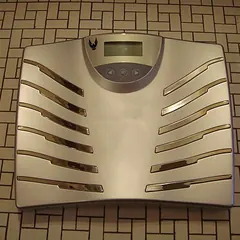 Illustrative
OMRON BF511 – 8-sensor body composition monitor
Clinically validated. Measures body fat, BMI, muscle mass, visceral fat and basal metabolic rate with 8 electrodes for hands and feet. Up to 4 profiles. Leading brand in health devices.
- 8 electrodes: segmental readings for arms, trunk and legs
- Clinically validated as a medical device
- Consistent readings (~2% margin according to professional reviews)
- No Bluetooth or app: you have to log the data by hand
Best for: Lose fat · Build muscle · General health
IllustrativeRenpho body composition scale
Good value for approximating your body composition.
- Connectivity
- App
- Accuracy
- Entry-level
Best for: Lose fat · Build muscle
Illustrativeeufy Smart Scale P2 Pro Body Composition Scale
A mid-range scale with Wi-Fi and Bluetooth that tracks 16 metrics, including heart rate. Good for following body composition as a household without paying premium-brand prices.
- 16 metrics, including heart rate and bone mass
- Syncs via Wi-Fi and Bluetooth with Apple Health and Google Fit
- 50 g precision and unlimited users
- Some composition readings are only approximate
Best for: Lose fat · Build muscle · General health
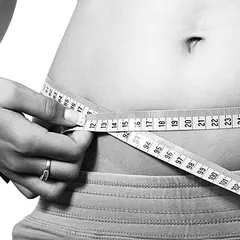 Illustrative
Accu-Measure Fitness 3000 skinfold caliper
A simple caliper to measure skinfolds and estimate body-fat percentage with 3 or 7-site formulas. A useful alternative to bioimpedance if you always measure the same spots.
- Cheap, with no batteries or app
- Not affected by hydration level
- Small and easy to store
- Takes practice: results depend on technique
Best for: Lose fat · Build muscle · General health
IllustrativeVitafit body composition scale
An entry-level scale for getting an approximate idea of your body composition without spending much.
- Bluetooth
- Mobile app
- Price
- Entry-level
Best for: Lose fat · General health
IllustrativeRetractable body measuring tape 150 cm
Essential for using the Navy method or tracking your waist/hips monthly.
Best for: Lose fat · General health
IllustrativeXiaomi Mi Body Composition Scale 2
A very affordable bioimpedance scale to start logging weight and body fat on your phone. A good choice if you only need the basics.
- Great value for money
- Measures weight, body fat, muscle mass and water
- Bluetooth connection with the Mi Fit / Zepp Life app
- No Wi-Fi: your phone must be nearby to sync
Best for: Lose fat · Build muscle · General health
IllustrativeWithings Body+ Smart Body Composition Scale
For anyone who wants to track weight, body fat and muscle mass with reliable data and automatic Wi-Fi sync. A good fit if several people share the scale (up to 8 users).
- Syncs via Wi-Fi and Bluetooth with the app and Apple Health
- Measures body fat, muscle mass, water and bone mass
- Recognises up to 8 users
- More expensive than other bioimpedance scales
Best for: Lose fat · Build muscle · General health
Quick comparison
| Product | Type | Budget | Best for |
|---|---|---|---|
| OMRON BF511 – 8-sensor body composition monitor | Recommended | $$ | Lose fat, Build muscle, General health |
| Renpho body composition scale | Best value | $ | Lose fat, Build muscle |
| eufy Smart Scale P2 Pro Body Composition Scale | Recommended | $$ | Lose fat, Build muscle, General health |
| Accu-Measure Fitness 3000 skinfold caliper | Best value | $ | Lose fat, Build muscle, General health |
| Vitafit body composition scale | Best value | $ | Lose fat, General health |
| Retractable body measuring tape 150 cm | Best value | $ | Lose fat, General health |
| Xiaomi Mi Body Composition Scale 2 | Best value | $ | Lose fat, Build muscle, General health |
| Withings Body+ Smart Body Composition Scale | Top quality | $$$ | Lose fat, Build muscle, General health |
How to choose a body-composition scale
These scales send a very weak electrical current through your body and estimate fat, water and muscle mass from the resistance it meets. It is an equation-based estimate, not a direct measurement, which is why two models can give different numbers for the same person on the same day.
Before comparing models, decide what you want the data for. If you just want to follow your weight and body-fat trend week to week, a simple foot-electrode bioimpedance scale is enough. If you want more detail, some models add hand grips so the current travels through the arms and torso as well.
- Electrodes: feet-only is the common and cheaper design; hand grips make the reading more complete.
- User profiles: essential if several people share the scale.
- App and data export: handy for charts, but do not make it your main criterion.
- Hydration sensitivity: every model suffers from it, so how you use the scale matters more than the brand.
What actually matters (and what doesn't)
Consistency is what counts. Weigh yourself at the same time, in the same conditions and with the same hydration, for example in the morning after using the bathroom and before eating or training. Look at the average of several weeks, not a single day: your weight can swing a kilo or two from water and food without any change in fat.
The decimal point matters less. A body-fat reading of 18.4% is not more reliable than 18%. Do not trust metrics such as metabolic age or body score either; they are manufacturer-specific calculations that are of little use for decisions. And an absolute body-fat figure from a home scale cannot be compared with a DEXA scan: use it to see changes, not to label yourself.
The body tape measure: the cheap tool most people skip
A retractable body tape measure costs very little and measures something a scale cannot see: where your body is changing. Waist, hips, arm and thigh, measured monthly at the same spot, show whether you are losing fat or gaining muscle even when your weight stays put. It is also what you need for the Navy method of estimating body fat.
Measure without pulling tight, keep the tape parallel to the floor, and read after a normal exhale. If you can, note the exact landmark (for instance, level with the navel) so you can repeat it the same way.
Which option fits you
If you are starting out and want a trend reference without spending much, the budget bioimpedance scales on the list (best value) do the job. If you want a fuller reading, the recommended mid-range model with hand and foot electrodes and several profiles suits families and anyone who tracks regularly. Whichever you pick, the tape measure is the inexpensive companion worth owning.
A caution: bioimpedance scales are generally not recommended for people with pacemakers or other implanted electrical devices, or during pregnancy. If that applies to you, check with your doctor first.
Frequently asked questions
Are bioimpedance scales accurate?+
They are reliable for tracking trends, not for giving an exact percentage. Results depend on your hydration, whether you have eaten or trained, and the manufacturer's equations. If you measure under the same conditions every time, changes over several weeks are useful.
Is a hand-and-foot scale better than a feet-only one?+
In principle an eight-electrode model gives a more complete reading because the current also passes through the arms and torso. It is still an estimate, though. If you weigh in consistently, a feet-only scale shows your progress just as well.
When should I weigh myself so readings are comparable?+
In the morning, after using the bathroom, before breakfast and training, and in light clothing. Keep those conditions the same every time and compare weekly averages rather than single days.
Can I skip the scale and just use a tape measure?+
Yes, if your goal is to see how your body is changing. Waist and hip measured monthly, alongside photos and your gym performance, give a very good picture. The scale adds a daily weight figure, which helps when adjusting calories.
Learn more
- Body composition
- Calorie calculator
- Best Bioimpedance Scales 2026: Comparison by Tier (Value, Mid-Range, and Premium)
- How to Measure Your Body Fat at Home (Without Expensive Equipment)
- Body Recomposition: Lose Fat and Gain Muscle at the Same Time
- How to Calculate Maintenance Calories Without a Smart Scale